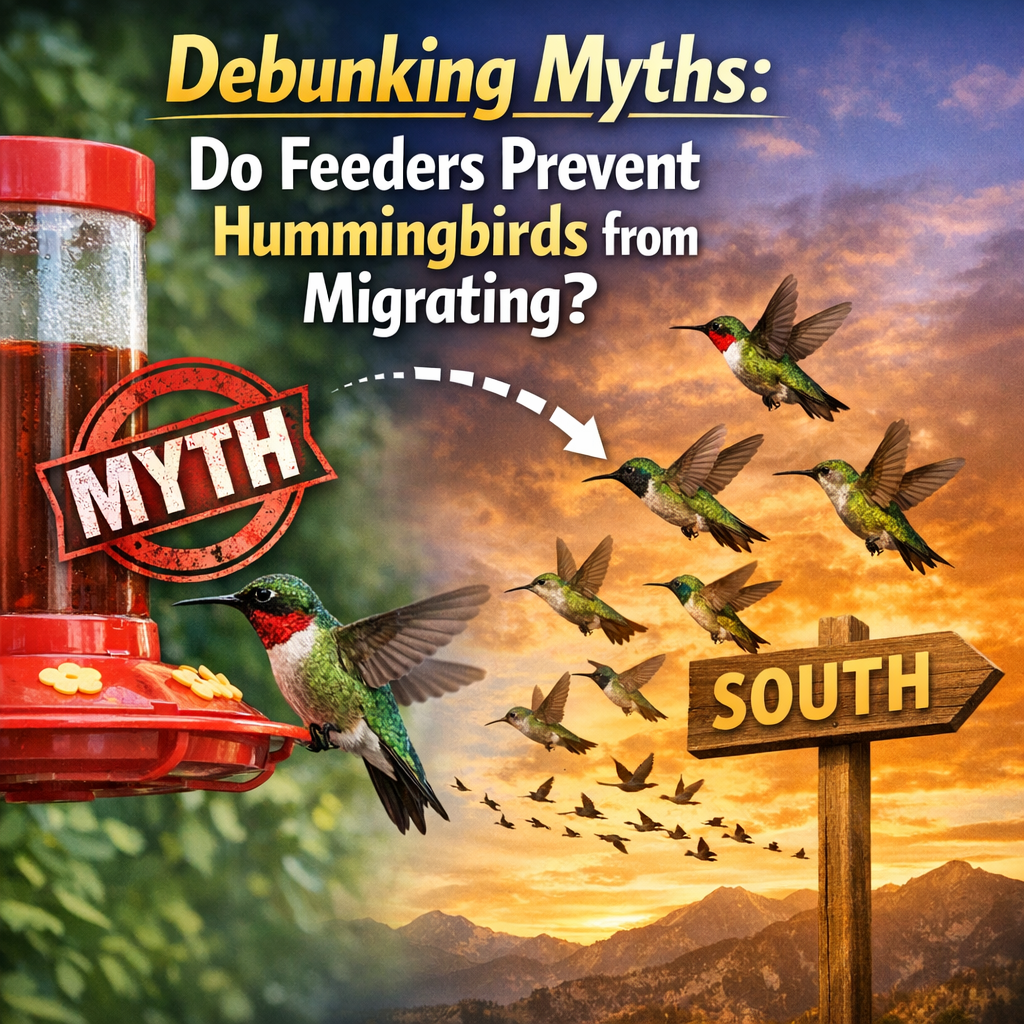
Debunking Myths: Do Feeders Prevent Hummingbirds from Migrating?
Debunking the Myth: Does Keeping Feeders Up Stop Hummingbirds From Migrating?
Bird lovers and backyard ornithologists often worry about the impact of bird feeders on natural behaviors, especially when it comes to seasonal migrations and natural food sourcing. One prevalent concern is whether keeping feeders up can prevent hummingbirds, and birds in general, from migrating. Additionally, there’s the question of whether supplemental feeding discourages birds from seeking out their natural food sources. Let’s delve into what science says about these common bird feeding myths.
Hummingbirds and Migration: Influenced by Feeders?
Impact of Feeders on Migration Patterns
Bird migration is a complex behavior primarily driven by environmental cues such as daylight, weather changes, and temperature fluctuations, rather than the availability of food alone. Hummingbirds, known for their impressively long migratory journeys, are particularly sensitive to these natural triggers.
Scientific Insights
Research indicates that the presence of feeders does not alter the innate impulse of hummingbirds to migrate. Defined by genetics and the need to breed in optimal conditions, the migration urge is far stronger than the availability of a consistent food source like a feeder. Feeding stations may actually benefit hummingbirds during their migration, providing necessary energy that might be scarcer in natural settings due to environmental changes like urban development or unusual weather patterns.

Best Practices for Feeding During Migration
When choosing to keep feeders up during migration seasons, consider these guidelines to help rather than hinder the hummingbirds:
- Maintain Cleanliness: Regularly clean feeders to prevent the spread of disease.
- Provide Proper Food: Use a nectar solution of four parts water to one part white sugar; avoid red dyes.
- Timely Placement: Put feeders up in time for early arrivals and keep them up late enough for stragglers.
General Bird Feeding Concerns: Does It Affect Natural Foraging?
Dependency on Feeders
A common concern among bird enthusiasts is that birds may become dependent on feeders, foregoing natural foraging and potentially suffering from nutritional imbalances. Here’s what the studies suggest:
Research Findings
Birds typically use feeders as a supplementary source of food. Studies have shown that wild birds garner a mere 25% of their daily food intake from feeders, with the remainder coming from natural sources. This indicates that feeding does not significantly disrupt their natural foraging habits.
Encouraging Natural Foraging
To ensure birds benefit from both your feeders and the environment, you can:
- Plant Native Species: Enhance your garden with native plants, bushes, and trees that bear fruits, nuts, seeds, and insects for birds.
- Offer Varied Foods at Feeders: Provide a mix of seed types, suet, and nectar to cater to different species and nutritional needs.
Conclusion: Myths Busted, But Mindful Feeding Matters
It’s clear from the research that keeping feeders up does not stop hummingbirds from migrating, nor does it significantly deter birds from seeking out natural food sources. However, the role of human-provided food sources like feeders should be approached with care. Feeders can support bird populations when used responsibly, complementing their natural diets and providing crucial support during times when natural food may not be abundant.
Remember, the goal of feeding birds should be to observe and support these delightful creatures without inadvertently harming their natural behaviors and ecological balance. Enjoy your bird watching with the reassurance that with the right practices, you’re aiding their survival rather than hindering it.