
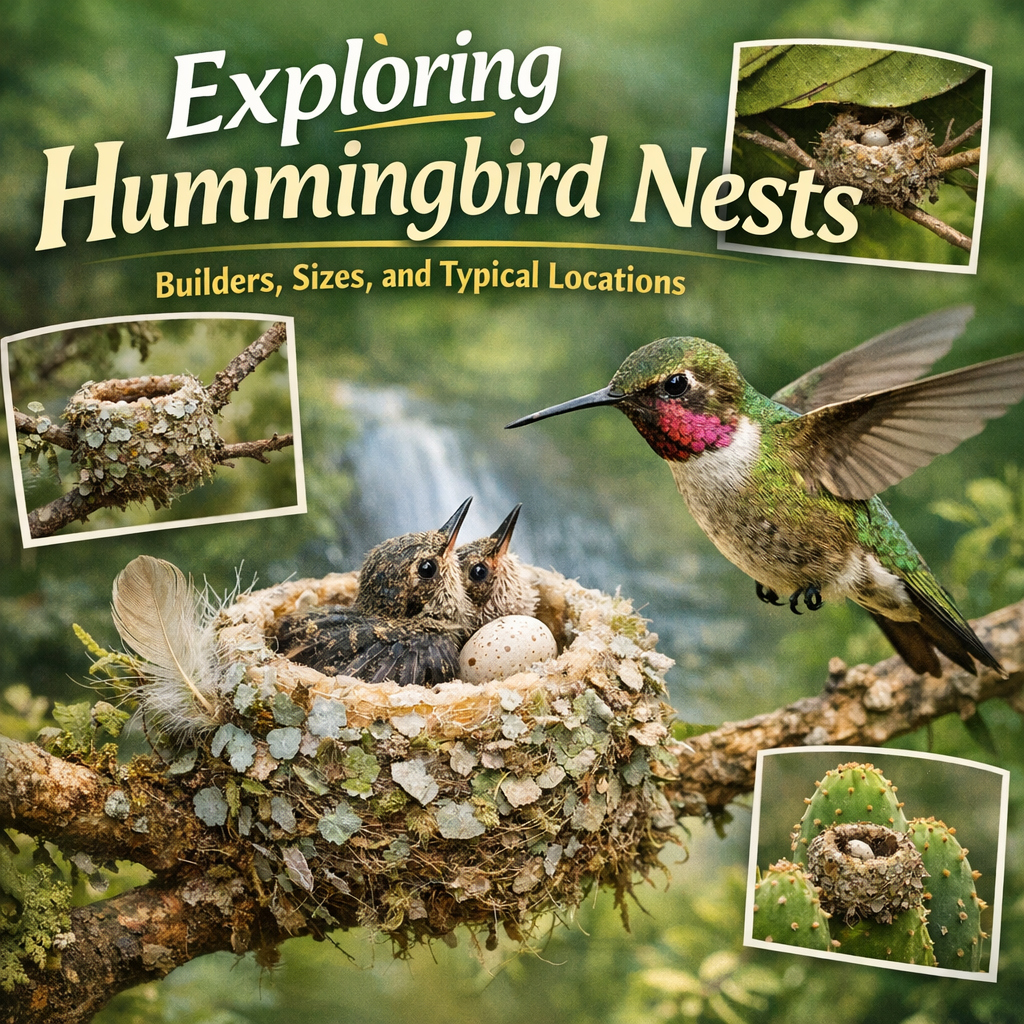
Exploring Hummingbird Nests: Builders, Sizes, and Typical Locations
Discovering the Hummingbird Nest: Marvels in Miniature
Hummingbirds, those mesmerizing avian acrobats, are not only known for their breathtaking aerial abilities but also for their unique approach to nesting. If you’ve ever wondered about the characteristics of a hummingbird nest, who builds it, its size, or where it’s typically placed, you’re in for a delightful exploration.
What Does a Hummingbird Nest Look Like?
Hummingbird nests are marvels of natural architecture. Designed primarily by female hummingbirds, these nests are compact structures shaped like small cups. They are meticulously crafted using an assortment of natural materials such as moss, lichen, and spider silk. The spider silk plays a crucial role, acting as a binding agent that holds the nest materials together and allows the nest to stretch as the chicks grow.
The exterior of the nest is often camouflaged with bits of leaves, bark, and other debris, making it challenging for predators to locate. Inside, the nest is lined with soft plant down, which provides a cozy environment for the eggs and developing chicks.

Who Builds the Hummingbird Nest?
It is the female hummingbird who solely carries the responsibility of nest building, which can take between five to seven days to complete. This process includes the gathering of materials and the actual construction of the nest. The males do not contribute to building the nest but focus on defending their territory and attracting as many females as possible.
How Big Is a Hummingbird Nest?
The size of a hummingbird nest is astonishingly small, reflecting the diminutive size of the bird itself. Typically, a completed nest is only about 1.5 to 2 inches in diameter—roughly the size of a half-dollar coin. It is crafted to be snug, providing just enough space to accommodate the hummingbird and her 2-3 tiny eggs, each being no larger than a pea.
Where Is the Nest Typically Placed?
Strategic Placement for Survival
The placement of a hummingbird nest is a matter of strategic importance. Female hummingbirds tend to place their nests in locations that offer safety from predators and shelter from harsh weather elements. It’s common to find hummingbird nests at heights ranging from 5 to 20 feet above the ground, although they can be found higher depending on the availability of suitable locations.
Common Locations Include:
- Branches of Trees or Shrubs: Often, nests are situated on a fork or branches with dense foliage that can provide cover.
- Under Leaves: Some species will build their nests on the underside of large leaves, like those of banana or palm trees, which provide natural protection and camouflage.
- Near Water Sources: Placing nests near streams or rivers can provide humidity, which is crucial during the hatching period.
Protection and Camouflage
Given their vulnerable size and the presence of numerous predators, hummingbirds are masterful at disguising their nests. The use of natural debris and the selected placement among dense leaves or branches help keep the nest hidden from the prying eyes of predators such as cats, larger birds, and snakes.
In Conclusion
The hummingbird nest is a stunning example of the intricacies of nature’s designs. Built with care and strategic foresight, these nests are not just homes but sanctuaries, engineered to offer the best start in life for hummingbird chicks. As unassuming as these nests appear, they are a testament to the strength and perseverance of hummingbirds, showcasing an incredible commitment to the next generation.
Next time you’re out in nature, take a moment to peer into the trees and shrubs—perhaps you’ll catch a glimpse of these miniature marvels, gracefully cradling the next generation of aerial wonders.