Exploring the Northernmost Hummingbird Range on the West Coast
title: “Exploring the Northernmost Range of Hummingbirds on the West Coast”
date: 2023-12-10
author: Nature’s Wanderer
The Northern Frontier: Exploring the Reach of Hummingbirds on the West Coast
As ethereal as a breeze and vibrant as a splash of sunlight, hummingbirds have captivated bird enthusiasts and nature lovers alike. Their diminutive size and astonishing aerial abilities make them a fascinating subject for study and observation. On the West Coast of the United States, hummingbirds display a wide range of biodiversity and adaptability. But just how far north do these energetic avians venture? Let’s delve into the geographic and climatic boundaries of their northernmost range along the West Coast.
Hummingbirds on the West Coast: An Overview
Hummingbirds, primarily associated with tropical environments, are also residents along the temperate zones of the West Coast. This region provides an abundant variety of habitats, from the arid deserts to lush coastal forests, all rich with nectar-bearing flora that are crucial for hummingbird sustenance. These birds are often seen flitting with uncanny speed, their wings a blur and their iridescent feathers catching the light.
The Species and Their Ranges
Anna’s Hummingbird
One of the most common and robust species, Anna’s Hummingbird, originally native to Baja California, has expanded its range north due to urbanization and the planting of exotic flowers. Today, Anna’s hummingbirds are year-round residents as far north as British Columbia. They have adapted remarkably to both urban and wild landscapes, frequenting backyard feeders even in chilly winters.

Rufous Hummingbird
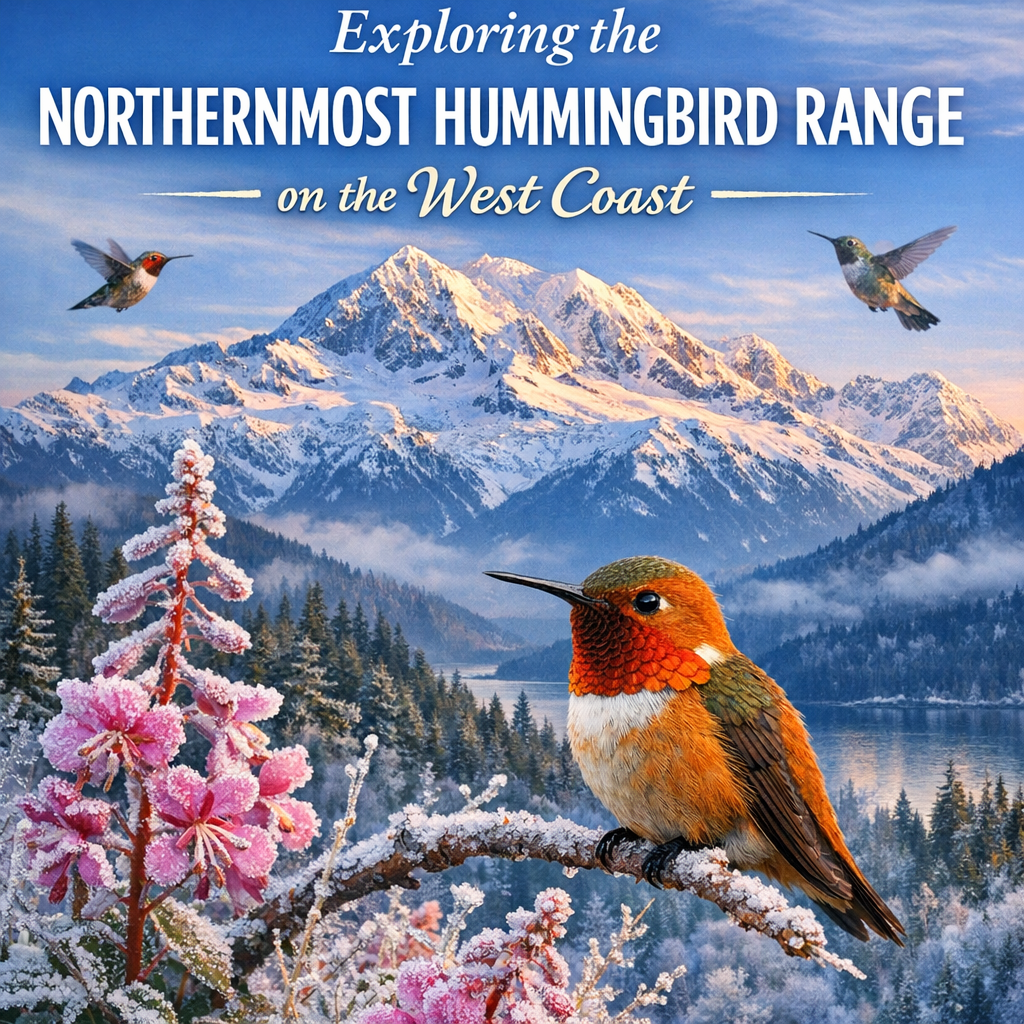
The Rufous Hummingbird, famed for its fiery plumage and aggressive nature, embarks on an epic migration from Mexico to Alaska each year. Its range extends significantly further north than any other hummingbird species on the West Coast. During spring and summer, these birds can be predominantly found in the Pacific Northwest and Alaska, exploiting the rich floral resources of coastal and mountainous regions.
Factors Influencing Hummingbird Distribution
The northern reach of hummingbirds along the West Coast is influenced by several factors:
Climate and Weather
Cold weather and frost can impact food availability (nectar and insects) crucial for the high energy needs of hummingbirds. Mild winters on the West Coast, particularly along the coastal regions, support the survival of these birds.
Availability of Food Sources
The distribution of flowering plants that bloom sequentially from south to north helps to support the northward migration and sustenance of hummingbirds. Residential gardens, city parks, and natural landscapes rich in suitable flowering plants extend their possible range.
Urbanization
Urban areas with gardens and feeders provide refuge and resources, enabling hummingbirds to survive in regions where natural food sources might be scarce, especially during off-peak seasons.
Conservation and Observation
While hummingbirds have adapted well to various environments, their presence is a delicate indicator of ecological balance and the health of their habitats. Conservation efforts focus on preserving natural habitats and promoting garden landscapes that are friendly to hummingbirds and other pollinators. Observing these creatures not only brings joy but also contributes to citizen science projects that track migrations and populations, providing vital data for conservationists.
Final Thoughts
From the lush, flower-packed gardens of Southern California to the cooler, varied landscapes of British Columbia and even Alaska, hummingbirds prove to be as resilient as they are enchanting. Their ability to thrive in diverse climates underscores the importance of ecological preservation and the simple joy these creatures bring to observers. So, whether you’re a bird enthusiast or a lover of nature, keeping an eye to the skies for that distinctive hover and flash of color can connect you to the wild tapestry of life along the vibrant West Coast.
Protecting these marvelous birds and their habitats ensures that generations to come will also delight in their tiny majesty and aerial antics, a reminder of nature’s endless capacity for wonder and adaptation.