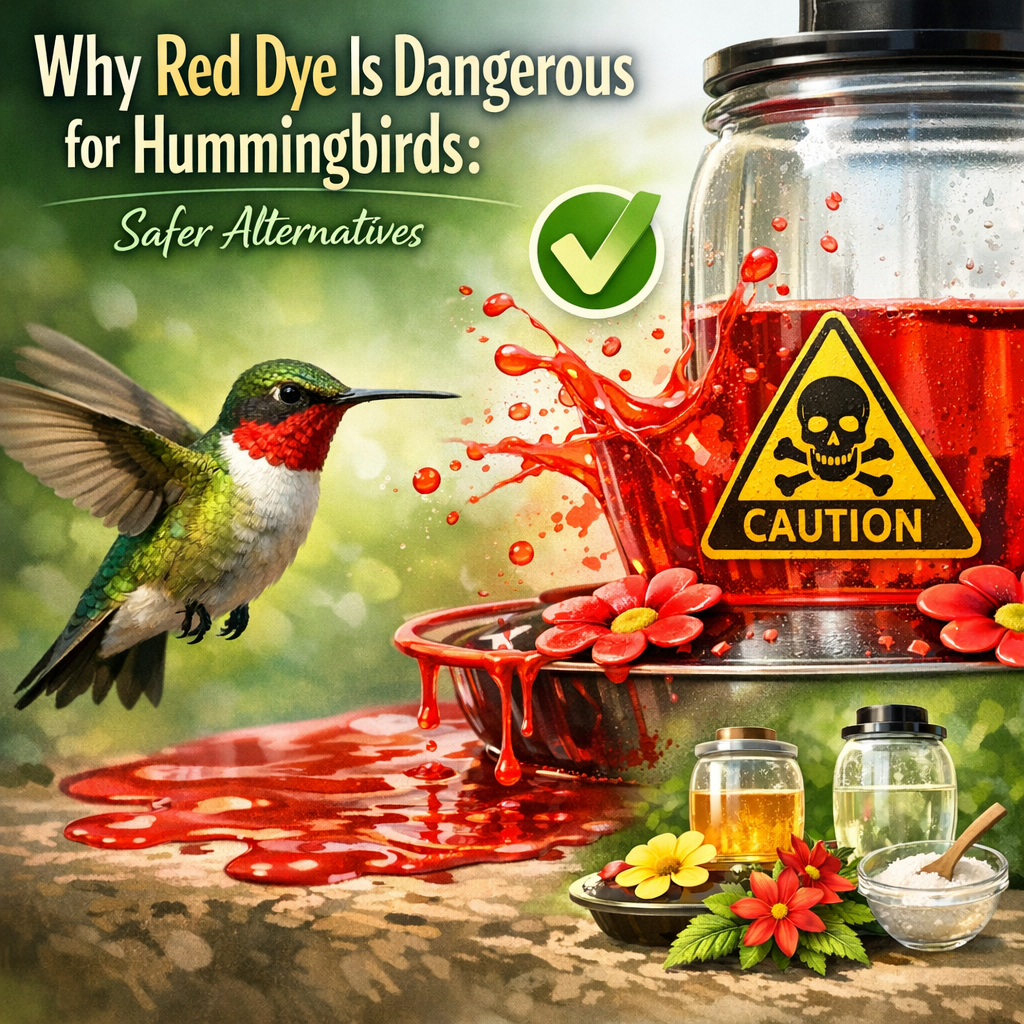
Why Red Dye Is Dangerous for Hummingbirds: Safer Alternatives
Why Red Dye Is Dangerous for Hummingbirds (And What to Use Instead)
Hummingbirds, with their iridescent feathers and rapid wing flaps, are a mesmerizing sight for many nature enthusiasts. One common way to attract these tiny birds is by using hummingbird feeders filled with nectar. Traditionally, this nectar is often colored red to attract birds more effectively. However, the use of red dye in hummingbird food has raised significant concerns among scientists and bird lovers alike. Here’s what you need to know about the dangers of red dye and safer alternatives to use.
The Harm Caused by Red Dye
Toxic Ingredients
Many commercial red dyes contain chemicals that can be harmful to hummingbirds. These dyes are often petroleum-based and can contain contaminants such as lead, arsenic, or other heavy metals which are toxic to birds at even minimal levels.
Health Risks for Hummingbirds
The metabolism of hummingbirds is extraordinarily high, making them particularly sensitive to any harmful substances they consume. Research indicates that ingestion of red dye can lead to:

- Reproductive problems: Issues such as lower hatch rates and deformities in offspring have been observed.
- Liver and kidney damage: The tiny organs of hummingbirds are not capable of filtering out the toxins efficiently, leading to organ damage over time.
Misconceptions About Color Attraction
It’s a common myth that hummingbirds are only attracted to red. Although they are drawn to brightly colored objects, including flowers of various hues, red is not required to attract them to feeders. Hummingbirds will happily feed from any feeder with suitable nectar, regardless of its color, as long as it provides the high-energy sustenance they need.
Safer and Healthier Alternatives
Making Your Own Hummingbird Nectar
You can easily create a safe and healthy substitute for commercial nectar at home. Here is a simple recipe:
- Mix one part plain white sugar with four parts water.
- Boil the mixture for 1-2 minutes to help break down the sugar and kill any bacteria or yeast spores.
- Allow it to cool before filling the feeder.
This homemade solution has several benefits:
- No harmful chemicals: It’s free from dyes and preservatives which can harm birds.
- Economical: It’s cheaper than buying pre-made solutions.
- Highly effective: It closely mimics the natural sucrose content found in most flowers favored by hummingbirds.
Suitable Feeder Placement and Maintenance
Beyond just providing the right kind of food, ensuring that your feeder is in a safe and strategic location is key to protecting these delicate birds. Here are some tips:
- Place feeders in shady areas to slow fermentation of the nectar, which can create harmful bacteria.
- Clean feeders at least once a week to prevent mold and bacterial growth, using a solution of one part vinegar to four parts water. Rinse thoroughly afterwards.
Colors That Attract Hummingbirds Without Harm
To still visually attract hummingbirds without using harmful dyes, consider the following:
- Use red feeders: Opt for feeders that are red but fill them with clear nectar.
- Add red accents: If your feeder isn’t red, you can tie a red ribbon on the feeder or place it near red flowers to attract birds.
- Garden with hummingbirds in mind: Plant a variety of red, purple, and yellow flowers that are natural nectar sources, such as petunias and bee balm.
Conclusion
The use of red dye in hummingbird nectar is not only unnecessary but can be harmful to these delightful creatures. By choosing to make your own nectar and ensuring clean, safe feeder practices, you can provide a healthier environment for hummingbirds. Meanwhile, maintaining a colorful garden or using naturally red objects around feeders can do just as well in attracting these birds—ensuring a beautiful and safe hummingbird haven in your backyard.