Hummingbird Migration 2026: Stunning Insights Revealed
Focus Keyword: Hummingbird Migration North
Hummingbird Migration North: Unraveling the Mysteries of Their Annual Journey
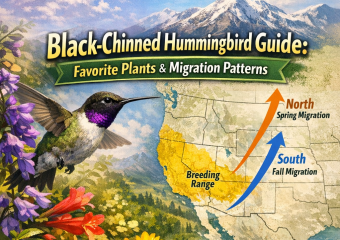
Hummingbird migration north is a mesmerizing natural phenomenon that occurs every year, captivating ornithologists and bird enthusiasts alike. As we step into 2026, these tiny, vibrant birds are mainly congregated in Central America, poised to embark on their rigorous journey northward. Understanding the scientific triggers for this migration sheds light on the intricate interplay between ecology and the behavioral patterns of hummingbirds.

The Science Behind the Timing of Hummingbird Migration
The decision to migrate is not whimsical but is deeply rooted in a range of ecological and biological cues. Contrary to the simplistic view of “following the flowers,” the timing and pattern of hummingbird migration are influenced by a sophisticated blend of factors.
Photoperiodism: The primary driver for migration in hummingbirds, as with many migratory birds, is the lengthening of daylight hours. As days grow longer in the spring, it triggers hormonal changes in hummingbirds that prepare them for migration. These changes gear up their metabolism and increase their fat reserves, rendering them fit for the long journey north.
Temperature and Food Availability: While Central America remains abundant with nectar-rich flowers, the onset of spring further north sparks a sequential bloom of floral resources along migration routes. This guarantees a continuous supply of food, which is critical for the energy-intensive flight of hummingbirds.
Genetic and Evolutionary Factors: Recent studies suggest that hummingbirds have an innate genetic compass guiding their migration. This instinctive mechanism helps them navigate towards areas that historically promise ample nesting opportunities and food supply, a pattern refined over thousands of generations.
The Role of Instinct and Adaptation in Their Migration
Maternal Instincts: The urge to migrate is also intertwined with breeding necessities. Female hummingbirds are prompted by a natural maternal instinct to seek out optimal conditions that promise the safety and nourishment of their future offspring. The northern regions typically offer secluded nesting spots that are safe from predators, alongside a bounty of insects and spiders essential for protein intake of both mother and chicks.
Adaptive Advantages: By migrating north, hummingbirds exploit ecological niches that are temporarily abundant in resources but would be unsustainable year-round due to seasonal fluctuations. This strategic movement helps reduce competition for resources among bird populations and also aids in their reproductive success by synchronizing their breeding period with peak food availability.
Why Leave Central America If Flowers Are Still Blooming?
It’s a valid question why hummingbirds would leave an area abundant in flowers. The answer lies in their survival strategy. Nesting in Central America would mean a higher competition with local bird species and other hummingbirds who choose not to migrate. By moving north, they find less crowded habitats, which reduces competition for nectar and increases their breeding success.
Moreover, the migration itself is a strategy to escape the rainy season in Central America, which can be detrimental to young hummingbirds’ survival. Inclement weather affects the availability of food and makes them vulnerable to diseases and predators.
Conclusion
As we analyze the reasons behind the hummingbird migration north, it’s clear that this phenomenon is a complex interplay of environmental cues, instinctual behaviors, and evolutionary adaptations. These birds are not simply “following the flowers,” but rather obeying a deep-rooted biological imperative that ensures their survival and continued proliferation.
Understanding these patterns not only enriches our knowledge of nature’s intricacies but also highlights the importance of preserving migratory routes that are threatened by climate change and human intervention. As stewards of the Earth, it’s crucial to ensure that the skies remain open for these remarkable migrants, whose journeys inspire as much as they inform.