Green Hermit Hummingbird Guide: Diet, Migration, and Plant Preferences
Exploring the Mysteries of the Green Hermit Hummingbird
The Green Hermit Hummingbird, a fascinating species known for its enthralling colors and unique behavior, is a bird that sparks interest among bird watchers and nature enthusiasts alike. In this blog post, we’ll dive into the life of the Green Hermit, highlighting where it winters, its migration patterns, primary diet, and its preferred plants during migration.
Wintering Grounds and Migration Patterns
Where Does the Green Hermit Hummingbird Winter?
The Green Hermit Hummingbird primarily finds refuge in the humid lowlands and foothills of tropical regions. During the winter months, these birds are commonly found in Central and South America, from southern Nicaragua down through Colombia and Venezuela to western Ecuador. This wide range allows them to exploit various ecosystems, where they can find ample food sources and optimal nesting conditions.
Migration Habits
Unlike many other hummingbird species, the Green Hermit does not follow the typical long-distance migration patterns seen in birds like the Ruby-throated or the Black-chinned Hummingbirds. Instead, their movement is more localized and elevation-dependent, often moving vertically up and down mountainous regions in response to the flowering cycles of plants and seasonal changes. This type of migration ensures they have a consistent food supply throughout the year.

What Does the Green Hermit Hummingbird Eat?
Primary Diet
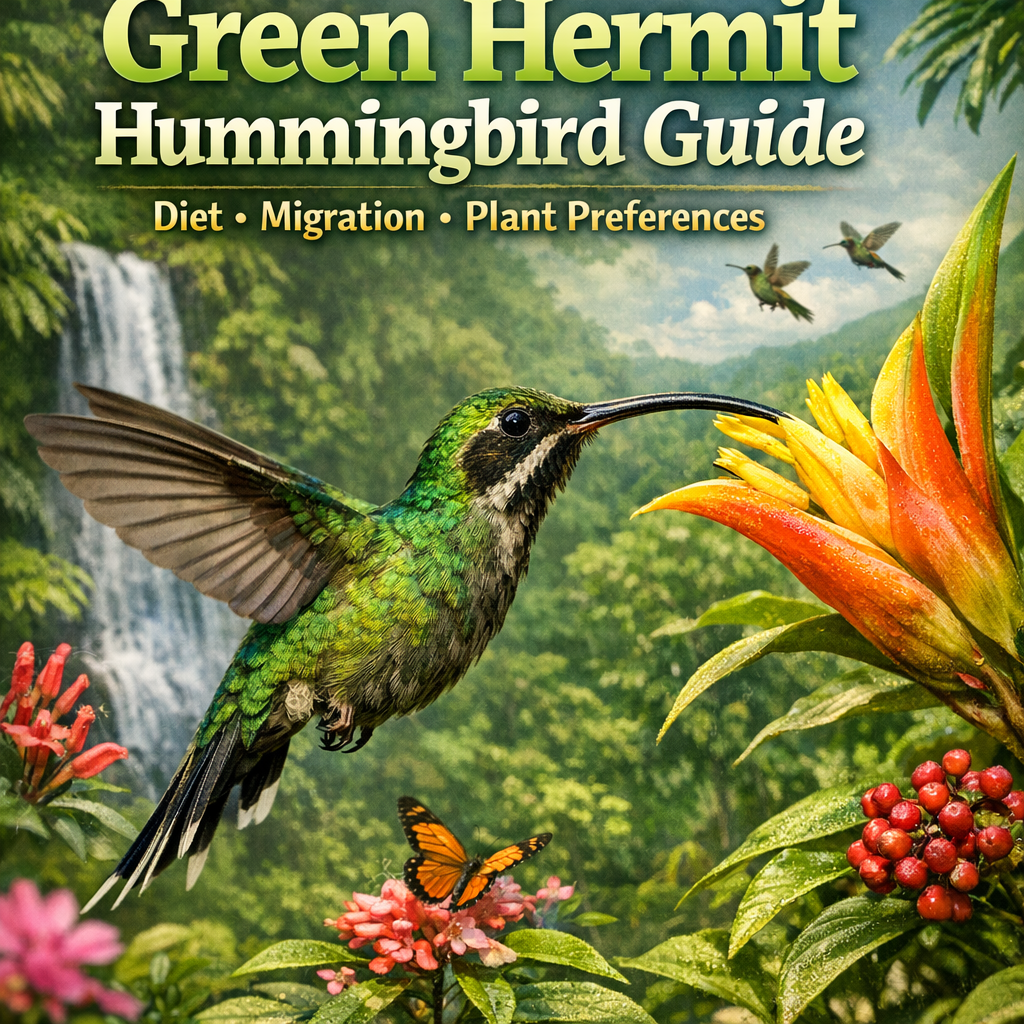
The diet of the Green Hermit Hummingbird is predominantly nectar-based. They have a particular fondness for deep, tubular flowers that are typically red or purple, which accommodate their long, curved beaks perfectly. This adaptation allows them to access nectar that other birds and insects cannot, reducing competition for food resources.
Feeding Techniques
In addition to nectar, these hummingbirds also consume small insects and spiders. These provide essential proteins and fats, helping them meet their nutritional needs, especially during breeding seasons or cold weather when their energy requirements increase. The Green Hermit is often seen hovering in mid-air, skillfully extracting nectar and catching insects right out of the air with precision.
Preferred Plants on Migration Routes
Floral Preferences
As the Green Hermit Hummingbird moves across its range, it exhibits strong preferences for certain types of plants. During its elevation migrations, it frequently visits:
- Heliconia species: These plants are a particular favorite due to their large, brightly colored bracts and deep flowers that fit the hermit’s beak shape perfectly.
- Ginger flowers: Similar to Heliconia, ginger flowers provide a rich source of nectar.
- Passiflora (passion flowers): Known for their intricate, radial flowers, these provide not only nectar but also habitat for the insects that Green Hermits consume.
These plants not only serve as food stations but also as navigational aids during their elevation migrations, marking their path through familiar territory.
Role of Plants in Their Ecosystem
The plants favored by the Green Hermit Hummingbird during its migration are critical to the bird’s survival strategy. They form part of a co-evolutionary relationship where the bird benefits from the food resources, and the plants benefit from the pollination services provided by the hummingbird. This symbiotic relationship highlights the importance of plant conservation along the bird’s migration routes to ensure both species can continue to thrive.
Conclusion
The Green Hermit Hummingbird is more than just a bird; it is a vital part of the ecosystem dynamics in tropical America. Understanding their migration patterns, diet, and plant preferences not only enhances our knowledge but also underscores the importance of habitat conservation. By protecting these critical areas, we support a myriad of species, maintaining the balance of nature’s intricate web.