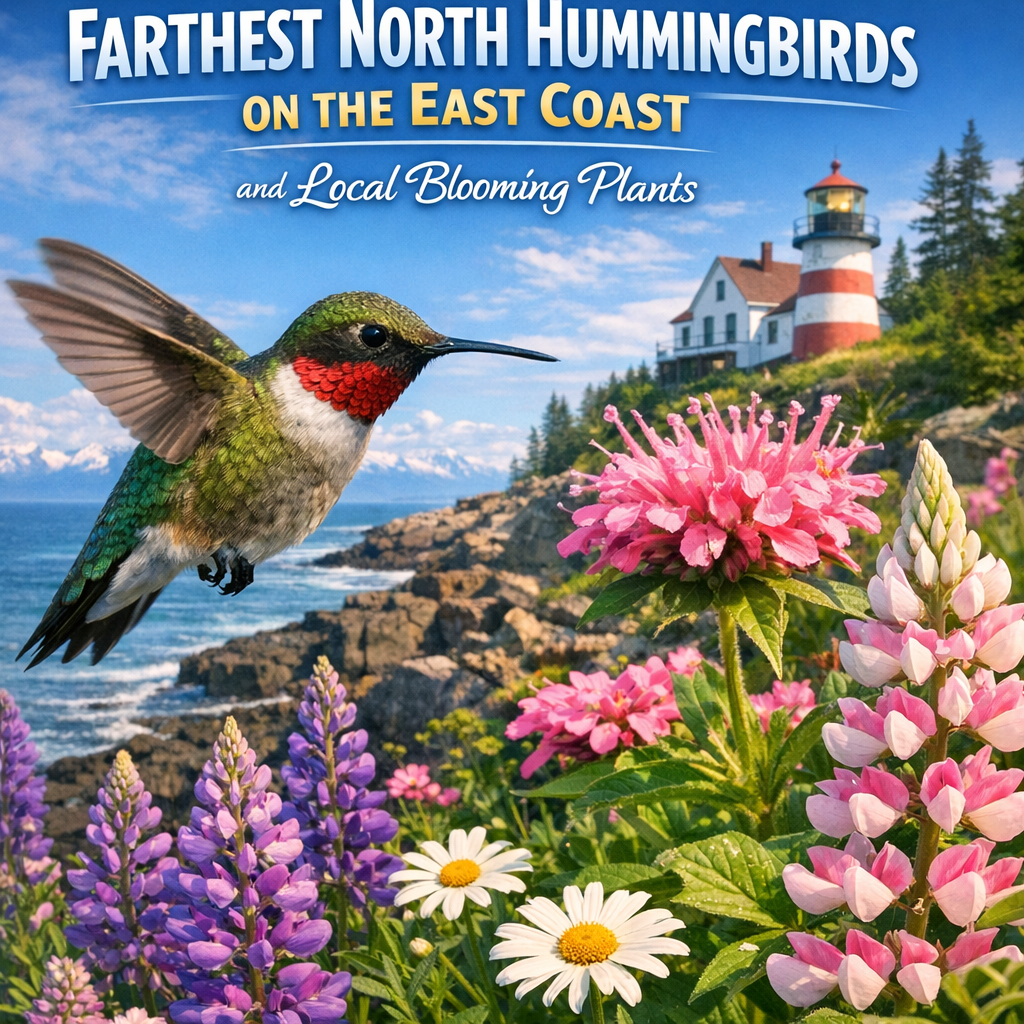
Farthest North Hummingbirds on US East Coast and Local Blooming Plants
Discovering the Northernmost Hummingbirds on the US East Coast
The enchanting dance of hummingbirds often is often viewed as a spectacle of warmer climates. Yet, these resilient little birds can be spotted much further north than many might expect, even along the east coast of the United States. In this blog post, we explore the furthest northern extent of hummingbird sightings on the US East Coast and delve into what plants are blooming there to sustain these tiny, energetic birds.
Hummingbird Sightings in Unexpected Places
The Ruby-throated Hummingbird is the most common species found along the eastern US. Typically, their range reaches far north, but it is a small town in Maine that holds the record for the most northerly spotting of a hummingbird in this region. Observers in this quaint locale have reported seeing these birds as late as October, suggesting a surprisingly resilient northern population.
Why Maine?
Maine offers a variety of habitats that are suitable for Ruby-throated Hummingbirds during their migration period. The presence of ample forests, gardens, and water bodies provides both shelter and food resources critical for their survival and journey.

What Blooms in Maine for Hummingbirds?
Although the scenery is often associated with the striking colors of fall, several plant species are still blooming during the late summer and early fall, providing necessary sustenance for hummingbirds in Maine. Here are a few that are particularly significant:
1. Bee Balm (Monarda didyma)
Bee Balm is a favorite among hummingbirds due to its tubular flowers, which are perfectly shaped for the birds’ long beaks. Its bright red color is highly attractive to hummingbirds.
2. Cardinal Flower (Lobelia cardinalis)
Another excellent plant for hummingbirds, the Cardinal Flower features strikingly vibrant red flowers that can bloom well into September.
3. Jewelweed (Impatiens capensis)
Often found in moist, shaded areas, Jewelweed blooms with orange-yellow flowers from late summer into fall. It’s a crucial nectar source for migrating hummingbirds.
4. Salvia (Salvia spp.)
Various Salvia species, with their prolonged blooming period, provide nectar in late summer and early fall. Some Salvia will keep flowering until the first frosts, making them invaluable for late-staying hummingbirds.
Plants for Supporting Hummingbirds: Tips for Gardeners
Gardeners interested in supporting these northern hummingbirds can consider planting the following:
- Native Species: Always opt for native species as they grow well in the local climate and tend to be more beneficial for native wildlife, including hummingbirds.
- Continuous Bloom: Plant a variety of plants to ensure a continuous bloom cycle throughout the hummingbirds’ staying period. This helps provide a consistent food source.
- Cluster Planting: Group the same plants in clusters to make it easier for hummingbirds to spot and access them.
- Avoid Pesticides: Since hummingbirds consume insects and spiders for protein, a pesticide-free garden ensures they have access to safe food supplies in addition to nectar.
Final Thoughts
The sight of a hummingbird flitting from flower to flower is a delightful surprise, especially in the northern reaches of the East Coast like Maine. By understanding the types of plants that bloom during their migration and possible extended stays, enthusiasts can help ensure that these marvelous little birds continue to grace these regions with their presence.
Whether you’re an avid birdwatcher or a casual observer, recognizing and supporting the habitat needs of hummingbirds adds an enriching layer to the experience of nature’s wonders around us. Be part of the effort to make your garden a welcoming refuge for these amazing creatures as they make their incredible journeys across the continent.