Exploring Allen’s Hummingbird: Appearance, Migration, Nesting, and More
The Fascinating World of Allen’s Hummingbird
Discover the vibrant life of Allen’s Hummingbird, a species renowned not only for its vivid appearance but also for its remarkable migration patterns and nesting habits. Whether you’re a bird watcher or just a nature enthusiast, Allen’s Hummingbird offers a striking glimpse into the world of these tiny, energetic birds.
What Does Allen’s Hummingbird Look Like?
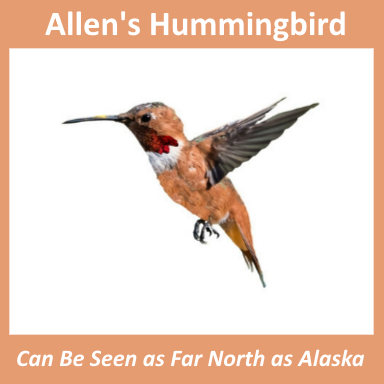
Allen’s Hummingbird (Selasphorus sasin) is a small, brightly-colored bird, primarily known for its incredible agility and speed. Adult males are particularly striking with their iridescent orange-red throats and green backs. Females and juveniles, while less colorful, showcase a green back and mostly greyish underparts, with some flashes of orange feathers in the tail, which becomes more pronounced in males.
Migration Patterns of Allen’s Hummingbird
Seasonal Travels
Allen’s Hummingbird is a migratory bird that showcases a well-defined pattern of movement:

- Spring Migration: Starting around late January, these birds begin their migration north from the wintering grounds in central Mexico.
- Fall Retreat: By late July through August, after breeding, they return to their wintering territories.
Preferred States for Migration
California plays a significant role in the life cycle of Allen’s Hummingbird. Although they are also seen in Oregon and even as far north as Alaska during migration, California serves as their primary breeding ground, particularly the coastal regions where the climate and flora support their nesting and dietary needs.
Nesting Habits of Allen’s Hummingbird
Nesting Sites
Allen’s Hummingbird prefers nesting in shrubby areas or forests, particularly favoring sites near coastal regions. They often choose branches in trees or shrubs, sometimes as low as just a few feet off the ground. The female is responsible for building the walnut-sized cup-shaped nest, which she crafts from plant fibers, spider webs, and other natural materials, camouflaging it with lichens.
Clutch Details
- Number of Clutches: Typically, Allen’s Hummingbird will deliver two clutches per year.
- Eggs per Clutch: Each clutch generally contains 2 eggs.
- Nesting Period: The incubation period lasts about 14-19 days, and the young are ready to fledge approximately 20-23 days after hatching.
Favorite Plants of Allen’s Hummingbird
Nectar-Rich Flowers
A vital aspect of their diet includes nectar from flowers. The favorite plant of Allen’s Hummingbird is the California fuchsia (Epilobium canum). This plant not only provides a critical nectar source but its flowering season matches the hummingbirds’ breeding season, making it an essential resource for adult and fledgling hummingbirds alike.
Importance of Native Flora
In addition to the California fuchsia, Allen’s Hummingbirds also feed on a variety of native and introduced flowering plants including sage, manzanita, and columbine. Their role as pollinators is significant, making them crucial to the ecosystem.
Conservation and Viewing
Allen’s Hummingbird, while not currently endangered, faces challenges due to habitat loss and climate changes. Conservation efforts are crucial to ensuring that these vibrant birds continue to thrive. Bird watchers hoping to catch a glimpse of these fast-moving creatures can do so during their migration seasons, especially in coastal California. Gardens planted with native, nectar-rich plants can also attract these hummingbirds, providing an excellent viewing opportunity.
Understanding and appreciating the life of Allen’s Hummingbird highlights the interconnectedness of our ecosystem. By supporting native plant growth and conservation initiatives, we can help ensure that Allen’s Hummingbird continues to brighten up our landscapes for years to come.