Do Hummingbirds Follow Pollen Instead of Flowers During Migration?
The Intriguing Migration of Hummingbirds: Flower Trails or Pollen Paths?
Hummingbirds, these tiny avian wonders, captivate us with their dazzling colors and aerial acrobatics. Often seen darting from flower to flower, hummingbirds are commonly believed to follow floral blooms during their migrations. However, a fascinating perspective suggests these birds might actually be tracking pollen, guiding them to the nectar-rich destinations they desperately need. Let’s delve into this riveting concept and uncover what truly guides hummingbirds during their migratory journeys.
The Traditional View: Following the Blooms
Seasonal Blooms and Migration Patterns
Traditionally, it is believed that hummingbirds migrate by following the bloom of flowers, which correlates with the seasons. As winter ends, flowers in the southern regions begin to bloom, providing the first nectar sources for hummingbirds. These birds then move northward with the wave of spring, tracking the sequential blooms that provide them with the energy needed for their journey.
Floral Dependence for Nectar
Hummingbirds have an insatiable need for nectar, which fuels their high-energy lifestyles. Each species tends to have flower preferences, often dictated by beak shape and size, which fits certain blooms perfectly. This symbiotic relationship suggests a strong evolutionary tie between hummingbirds and specific floral species, supporting the idea that flower tracking is crucial for their survival during migration.

An Alternative Hypothesis: Pollen Trails
The Role of Pollen in Hummingbird Migration
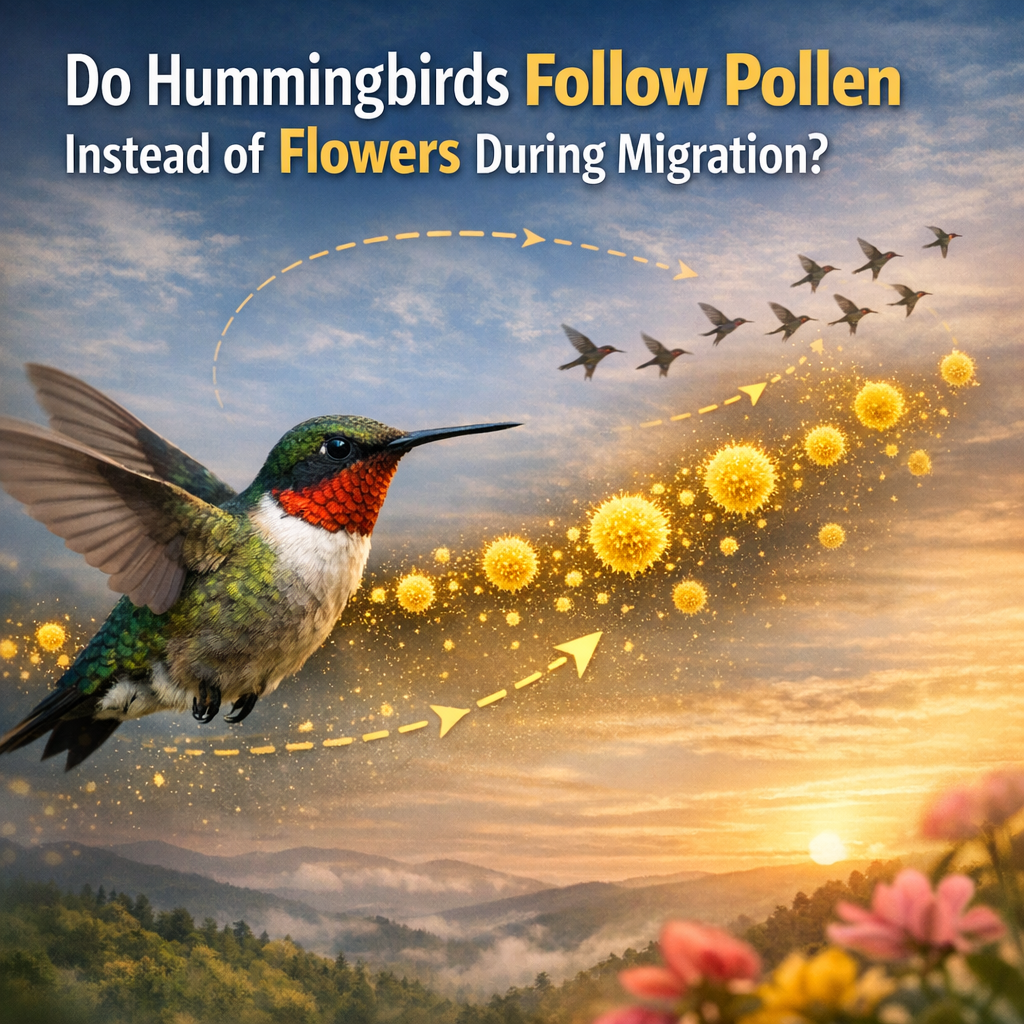
The alternative hypothesis posits that hummingbirds may be guided by pollen patterns rather than directly following flowering paths. Pollen, carried by the wind or other animals, could signal the presence of upcoming nectar sources before the hummingbirds visually identify the blooms themselves.
Scientific Insights
Research indicates that hummingbirds are exceptionally good at remembering locations of plentiful nectar sources and may use visual cues from the environment to navigate. Pollen, visible as fine dust on leaves or even in the air, could serve as one of these cues, indicating which areas will soon be rich in nectar.
Analyzing the Evidence
Navigation Skills of Hummingbirds
Hummingbirds possess remarkable spatial memories and can recall specific flowers and feeder locations from year to year. This ability suggests that while they may use a combination of direct sight and scent to locate flowers, subtle clues like pollen could feasibly play a part in their navigation strategy.
Studies and Observations
There are limited studies specifically focusing on pollen as a navigational tool for hummingbirds, making this an area ripe for further research. Observational data often shows hummingbirds revisiting areas where certain flowers are known to bloom annually, which supports the traditional bloom-following theory. However, anecdotal evidence from bird watchers sometimes notes hummingbirds appearing in areas just before the flowers bloom, hinting at the possible use of additional environmental cues like pollen.
Implications for Conservation
Understanding whether hummingbirds follow blooms or pollen trails has significant implications for conservation efforts. If pollen plays a critical role in their migratory paths, preserving a variety of plants, not just those known for large blooms, could be crucial. This would help maintain the ecological integrity of their habitats and support a broader range of wildlife.
Conclusion
While the traditional view of hummingbirds following flower blooms is well-supported, the intriguing possibility that they might also be guided by pollen presents a compelling area for further scientific investigation. Whether tracing vibrant blooms or subtle pollen trails, it’s clear that these tiny birds make monumental journeys guided by the intricate cues of nature. Preserving their pathways, replete with diverse floral and pollen sources, is essential to ensuring their continued survival and the ecological balance of their environments.
Are hummingbirds guided by the scented highways of blooms or the invisible paths of pollen? The answer may be a complex blend of both, reflecting the sophisticated navigation capabilities of these tiny migrants.