Do Azalea Plants Provide Free Nectar for Early Hummingbirds?
How Azalea Plants Benefit Early Arriving Hummingbirds
Each year, as the chill of winter begins to thaw and give way to the budding signs of spring, nature orchestrates a symphony of colors particularly noticeable with the blooming of azalea plants. Commonly recognized for their vibrant flowers and lush foliage, azaleas are more than just a visual treat. They play an important ecological role, especially in supporting early arriving hummingbirds.
Azaleas: A Spring Herald
An Overview of Azalea Blooming Season
Azaleas typically bloom during the late winter to early spring. This blooming season coincides with the return of hummingbirds from their winter migration. As these birds make their way back to their summer homes, azaleas stand ready to welcome them with a vital resource: nectar.
The Significance of Azaleas to Hummingbirds
During early spring, food sources are not abundantly available for hummingbirds who rely heavily on nectar for energy. The early blossoms of azaleas prove immensely beneficial to these tiny travelers.

The Nectar Connection
Quality and Abundance of Azalea Nectar
Azaleas produce a nectar that is particularly appealing to hummingbirds. The nectar not only provides necessary calories but is also a source of nutrients that are crucial for the health and stamina of hummingbirds as they continue their migration journey.
Reliability of Azalea Nectar
With their natural blooming schedule, azaleas are consistent sources of early spring nectar. This reliability makes them an essential part of the ecosystem for returning hummingbirds.
Mutual Benefits
Pollination Help from Hummingbirds
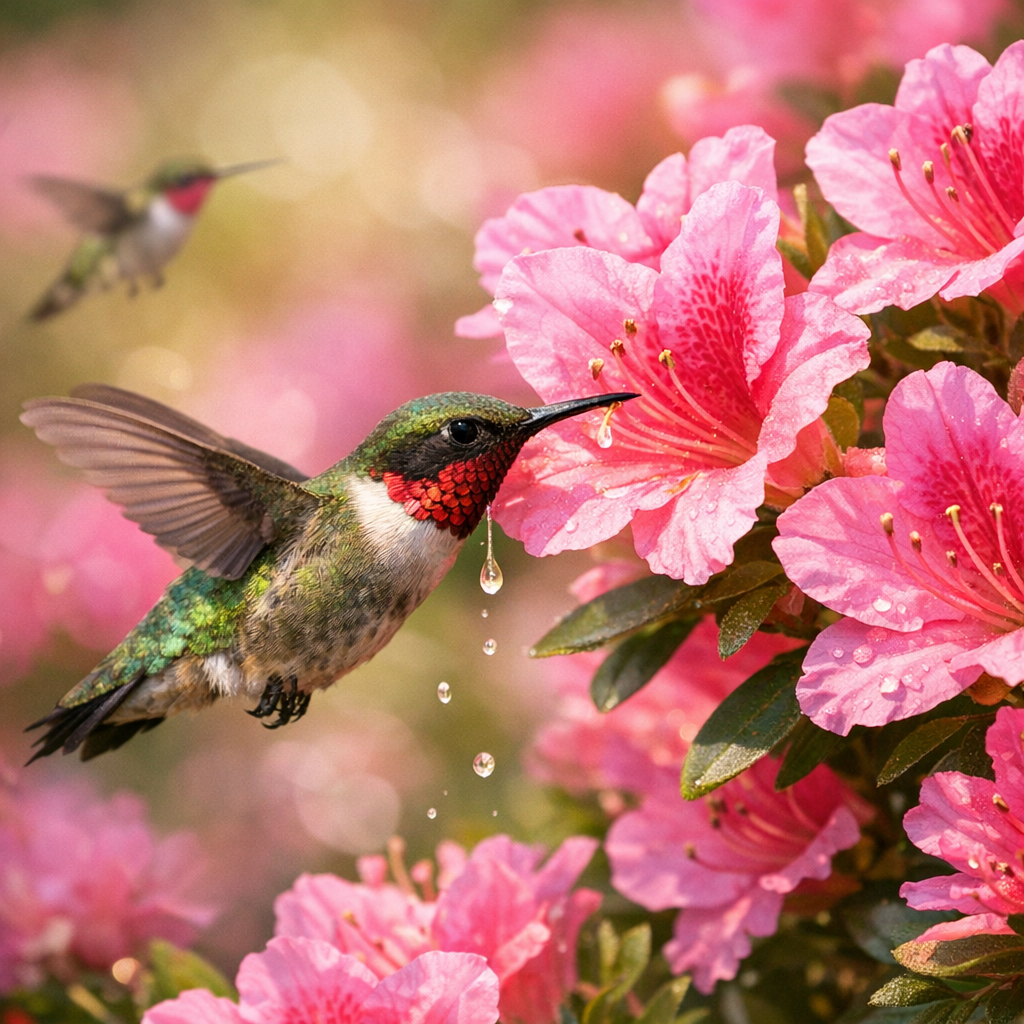
While hummingbirds feed on azalea nectar, they also play a role in the pollination of these plants. As they move from flower to flower, they inadvertently transfer pollen, helping with the reproduction of the plants.
Shelter and Protection
Beyond nectar, azaleas provide hummingbirds with shelter from predators and harsh weather conditions. The dense foliage offers a safe space for resting and even nesting for some species.
Cultivating Azaleas for Hummingbirds
Choosing the Right Azalea
If you’re considering planting azaleas to attract hummingbirds, opt for varieties that produce more nectar. Some popular choices that are known to attract hummingbirds in abundance include the ‘Western Azalea’ (Rhododendron occidentale) and the ‘Rosy Lights’ Azalea.
Planting Tips
- Location: Plant azaleas in a spot with good morning sunlight and partial shade in the afternoon to ensure they thrive.
- Soil: Ensure the soil is well-drained and slightly acidic for optimal growth.
- Watering: Keep the soil consistently moist, especially during the first growing season to establish a deep, extensive root system.
Additional Tips: Enhancing Your Garden’s Appeal
- Complementary Plants: Pair azaleas with other early-blooming flowers like crocuses and tulips to create a garden that provides continuous support for hummingbirds.
- Feeders and Water Sources: Adding feeders and water sources near your azalea plants can make your garden even more attractive to hummingbirds.
Conclusion
Azaleas are more than just a symbol of spring; they are critical lifelines for early arriving hummingbirds. By planting and maintaining these beautiful shrubs, not only do we enhance our garden’s aesthetics, but we also contribute to the wellbeing of hummingbirds. This mutual relationship between azaleas and hummingbirds highlights the interconnectedness of our ecosystem and the importance of supporting our local wildlife.