Discover the Mystique of the Costa Hummingbird: Habitat & Behavior
Exploring the Marvels of the Costa’s Hummingbird
The Costa’s Hummingbird, a small jewel-like bird, has intrigued birdwatchers and nature enthusiasts alike. This article dives into the fascinating world of the Costa’s Hummingbird, focusing on its unique characteristics, habitat preferences, and behaviors.
Understanding the Costa’s Hummingbird
Physical Description
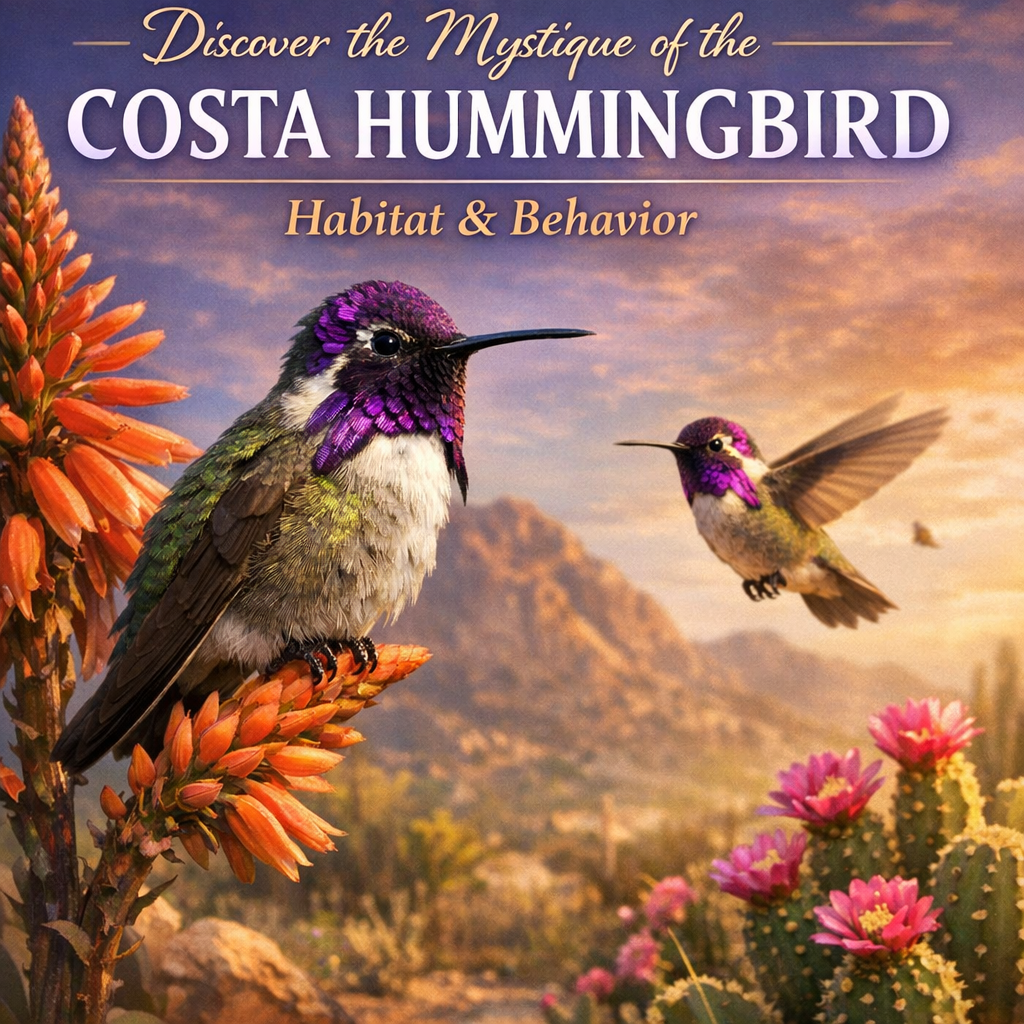
The Costa’s Hummingbird (Calypte costae) is one of the smaller species within the hummingbird family, measuring only about 3-4 inches in length. The male is particularly striking with vibrant iridescent purple feathers covering its throat and head, which can seem black in low light. Females and juveniles are more subdued, sporting grayish-green upper parts and a paler underside.
Unique Behaviors
The Costa’s Hummingbird exhibits several characteristics that set it apart:

- Hovering and Feeding: Like all hummingbirds, the Costa’s has the remarkable ability to hover in mid-air thanks to its rapid wing flaps—which can occur up to 50 times per second! This allows it to feed on nectar from brightly colored flowers.
- Impressive Courtship: The males perform a fascinating courtship display that includes a series of high-pitched chirps and a spectacular dive from up to 100 feet in the air, aimed at impressing potential mates.
Habitat and Distribution
Where to Find Them
Costa’s Hummingbirds are primarily found in the southwestern United States and parts of Mexico. In the U.S., their range includes states like California, Nevada, Arizona, and parts of Utah. They tend to migrate in response to the flowering seasons of plants that they depend on for food.
Preferred Environments
These birds favor arid to semi-arid environments such as deserts, scrubby areas, and open woodlands. They are particularly adapted to living in areas with sparse foliage where they can easily access flowers for feeding.
Conservation Status and Threats
Current Status
The Costa’s Hummingbird is classified as Least Concern by the IUCN Red List, indicating it is not currently at significant risk of extinction. This status is a result of its relatively stable population size.
Environmental Threats
Despite their current conservation status, Costa’s Hummingbirds face several environmental challenges:
- Habitat Loss: Urbanization and agricultural development can lead to the loss of natural habitats necessary for feeding and nesting.
- Climate Change: Changes in temperature and weather patterns can affect the availability of food sources and alter migration times.
How You Can Help
Interested in contributing to the conservation efforts for Costa’s Hummingbirds? Here are a few ways you can help:
- Plant Native Flowers: Grow nectar-rich plants in your garden to provide food sources for hummingbirds.
- Support Conservation Organizations: Donate or volunteer with organizations working to protect bird habitats.
- Be mindful of pesticide use: Reducing or eliminating pesticide use in your gardening practices can help keep local nectar sources safe for hummingbirds.
Conclusion
The Costa’s Hummingbird is not just a beautiful sight to behold; it’s a dynamic part of its ecosystem in arid and semi-arid regions of the southwestern United States and Mexico. By understanding more about this small avian wonder, we can better appreciate and support its presence in our natural world. Whether through creating hummingbird-friendly spaces in our backyards or supporting broader conservation efforts, there are numerous ways we can ensure that Costa’s Hummingbirds flourish for generations to come.