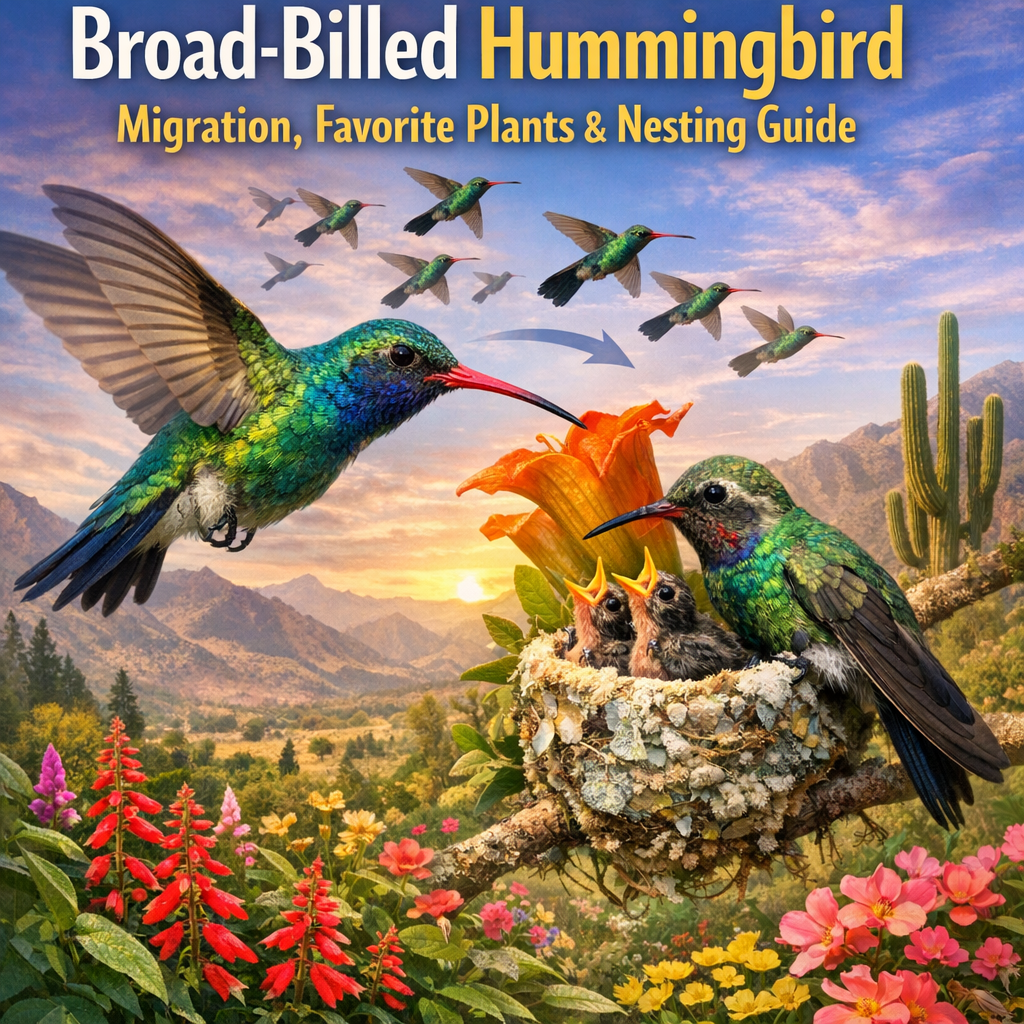
Broad Billed Hummingbird Migration, Favorite Plants, and Nesting Guide
The Broad-billed Hummingbird: A Fascinating Migratory Marvel
The Broad-billed Hummingbird, known scientifically as Cynanthus latirostris, is a vibrant and intriguing species of hummingbird, native to the Americas. This small bird captivates enthusiasts and ornithologists alike with its brilliant colors and unique behaviors. From its migratory patterns to preferred flora, discover the enchanting world of the Broad-billed Hummingbird.
Habitat and Migration: A Journey Between North and Central America
Where Does the Broad-billed Hummingbird Migrate?
The Broad-billed Hummingbird primarily breeds in the southwestern United States, particularly in Arizona and New Mexico. During the winter months, it migrates to warmer climates, heading as far south as Mexico and Guatemala. This remarkable journey ensures the hummingbird can take advantage of the temperate climates ideal for feeding and breeding.
A Floral Preference: Understanding Its Favorite Plant
What Is the Broad-billed Hummingbird’s Favorite Plant?
Among the various flowers that this bird visits, the Broad-billed Hummingbird shows a particular preference for the nectar of the agave plant. Agaves blossom into large, towering flowers that are not only visually stunning but also rich in nectar. These plants provide a critical energy source necessary for the hummingbird’s high metabolism and extensive traveling during migration. Additionally, the structure of the agave makes it an excellent fit for the long bill of the Broad-billed Hummingbird, allowing for efficient feeding without competition from other birds.

Nesting Habits: When and Where
Where and When Does the Broad-billed Hummingbird Nest?
The Broad-billed Hummingbird begins its breeding season in early spring and can continue into the summer. Nesting typically happens between March and June. They choose nesting sites in territories that are rich in resources, which means areas abundant with insects and nectar-bearing flowers.
These hummingbirds exhibit a strong preference for building their nests in sheltered trees or shrubs, usually near water sources such as streams or rivers. The nests are constructed by the female and are beautifully composed of plant fibers, spider webs, and other natural materials that help camouflage it from potential predators.
Conclusion: Learn and Protect
The Broad-billed Hummingbird not only serves as a subject of beauty and fascination but also plays a vital role in the ecosystems of its habitat. By understanding more about where this bird migrates, its favorite plants, and nesting habits, we can better appreciate and contribute to conservation efforts aimed at protecting these vibrant creatures and their environments.
By learning about and respecting the natural habits and preferences of species like the Broad-billed Hummingbird, we make strides toward more sustainable interactions with our planet’s diverse wildlife. Whether it’s planting more agave flowers to support their migration or supporting habitat conservation efforts, small steps can lead to significant impacts on the preservation of these incredible birds and the ecosystems they help sustain.