Attract Hummingbirds: Guide to Nectar Ratios, Feeder Tips & Plants
How to Attract Hummingbirds: Nectar Ratios, Feeder Maintenance & Plant Guides
Attracting hummingbirds to your garden can be a delightful and enchanting experience. These tiny, vibrant birds are not only a joy to watch but are also beneficial for pollination. To turn your garden into a hummingbird hotspot, you’ll need to focus on three key areas: creating the right nectar, maintaining your feeders, and choosing the best plants.
Crafting the Perfect Nectar
The Ideal Nectar Ratio
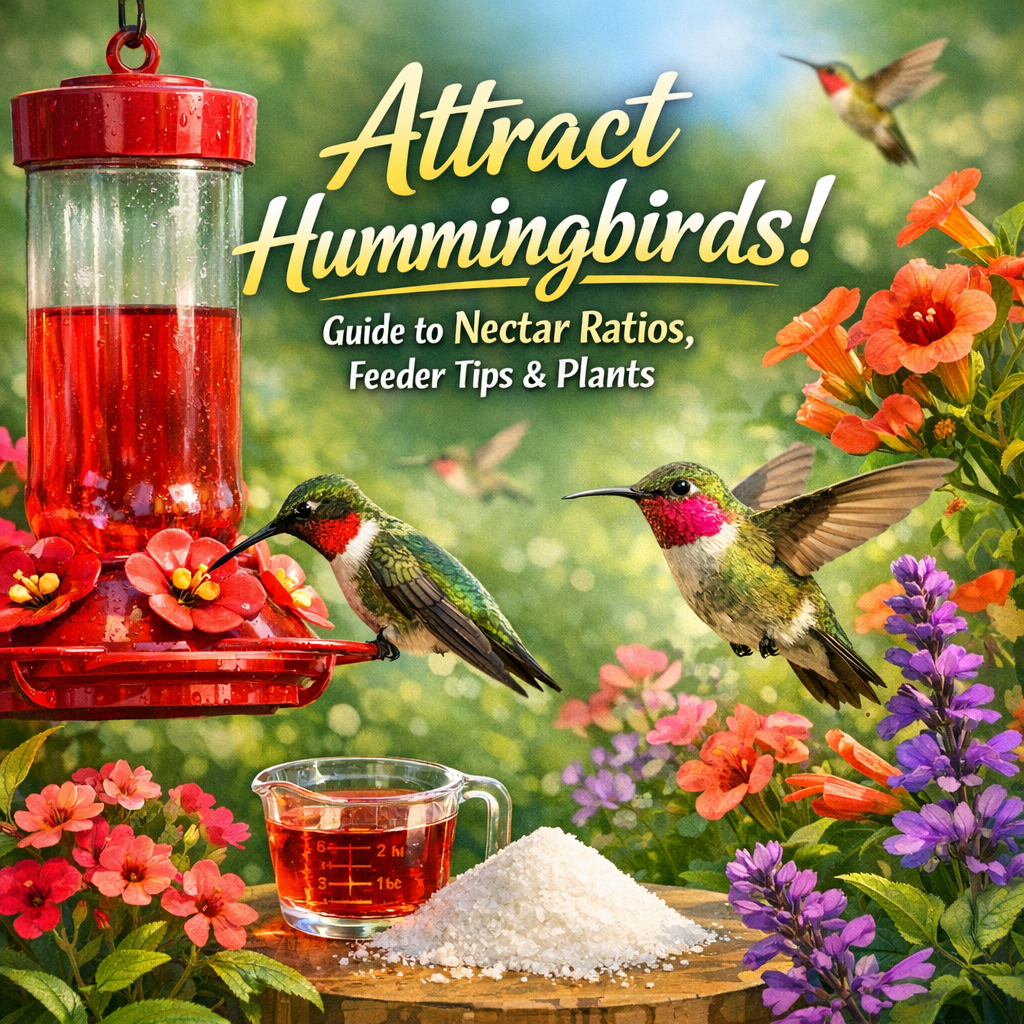
Hummingbirds feed on nectar for their primary source of energy. The ideal way to attract them is by providing a homemade nectar solution that mimics the natural flower nectar. The best and most recommended ratio for hummingbird nectar is 4 parts water to 1 part white sugar. Here’s how to prepare it:
- Boil the water to help dissolve the sugar and remove any impurities.
- Mix in the sugar while the water is still hot.
- Allow the solution to cool completely before filling your feeders.
It’s important to avoid using honey or artificial sweeteners as these can harm hummingbirds.

Frequency of Change
To ensure the health of visiting hummingbirds, change the nectar every few days, or daily in very hot weather, as it can ferment or grow bacteria that might harm the birds.
Feeder Maintenance Tips
Keeping Feeders Clean
Clean feeders are essential for the health of hummingbirds. An unclean feeder can harbor mold and bacteria which can lead to serious diseases in hummingbirds. Here’s a simple cleaning routine:
- Rinse the feeder with hot water every time you refill it.
- Use a brush to scrub any residues every few days.
- Once a month, clean the feeder with a solution of one part vinegar to four parts water, or use a mild bleach solution (one part bleach to nine parts water), followed by thorough rinsing.
Feeder Placement
Place feeders in a location safe from predators and where you can easily view the birds. Ideally, position them near shelter like bushes or trees to provide the birds with a quick escape route from predators. Also, placing the feeder in the shade can help slow down the fermentation process of the nectar.
Selecting the Right Plants
Native Flowers
Native plants are the best for attracting local hummingbird populations because they are adapted to the needs and preferences of local wildlife. Some excellent choices include:
- Trumpet Vine (Campsis radicans)
- Bee Balm (Monarda)
- Hummingbird Mint (Agastache)
Plant these in sunny spots, and if possible, group similar colors together to increase visibility.
Annuals and Perennials
Hummingbirds are attracted to both annuals and perennials. Here are a few that can help draw them to your garden:
- Petunias (Petunia)
- Zinnias (Zinnia)
- Salvia (Salvia spp.)
Shrubs and Trees
In addition to flowers, certain shrubs and trees are also attractive to hummingbirds. Consider planting:
- Butterfly Bush (Buddleia)
- Rhododendron (Rhododendron)
- Red Buckeye (Aesculus pavia)
Continuity of Bloom
To keep hummingbirds coming back, ensure that your garden has a continuous bloom schedule. This means planting a variety of species that flower at different times throughout the growing season.
In Conclusion
Attracting hummingbirds involves more than just hanging a feeder. It requires creating a habitat that offers consistent food, shelter, and safety. By following the guidelines above for nectar preparation, feeder maintenance, and plant selection, you’ll be well on your way to enjoying these beautiful birds all season long. Remember, the key to attracting hummingbirds is not just about filling a feeder but creating an environment that caters to their lifestyle and needs. Watch as your garden becomes a hub of hummingbird activity, bringing joy and vibrance to your outdoor space.