Explore Local Hummingbird Insights: Nectar Tips & Species Guides
Local Hummingbird Insights: Nectar Tips, Species Guides & Regional News
Hummingbirds, those mesmerizing, tiny birds known for their incredible aerial skills and love for nectar, are a delightful sight in many local gardens. Whether you’re a seasoned bird watcher or a newcomer eager to attract these colorful creatures to your backyard, understanding more about their habits and preferences can enhance your hummingbird watching experience. Here’s your guide to the best nectar tips, an overview of common species, and the latest regional news surrounding these fascinating birds.
Nectar Tips: Keeping Hummingbirds Happy and Healthy
Choose the Right Feeder
To attract hummingbirds, the type of feeder and its maintenance are crucial:
- Opt for bright colors: Red is particularly attractive to hummingbirds.
- Keep it clean: Clean feeders regularly to prevent mold and bacteria, which can harm the birds.
- Multiple feeders: Spread out multiple feeders to reduce competition among birds.
Homemade Nectar Recipe
Skip the store-bought and make your own nectar to ensure it’s free from preservatives and dyes:

- Simple Recipe: Mix one part white sugar with four parts water. Boil the mixture to help break down sugar crystals and eliminate any pathogens.
- No honey or artificial sweeteners: These can be harmful to hummingbirds.
Consistency in Feeding
Keep your feeders full and clean, especially during peak migration times, to ensure a steady food source for the birds.
Species Guides: Know Your Local Hummingbirds
Common Species in North America
Identifying different species can make your bird watching more engaging:
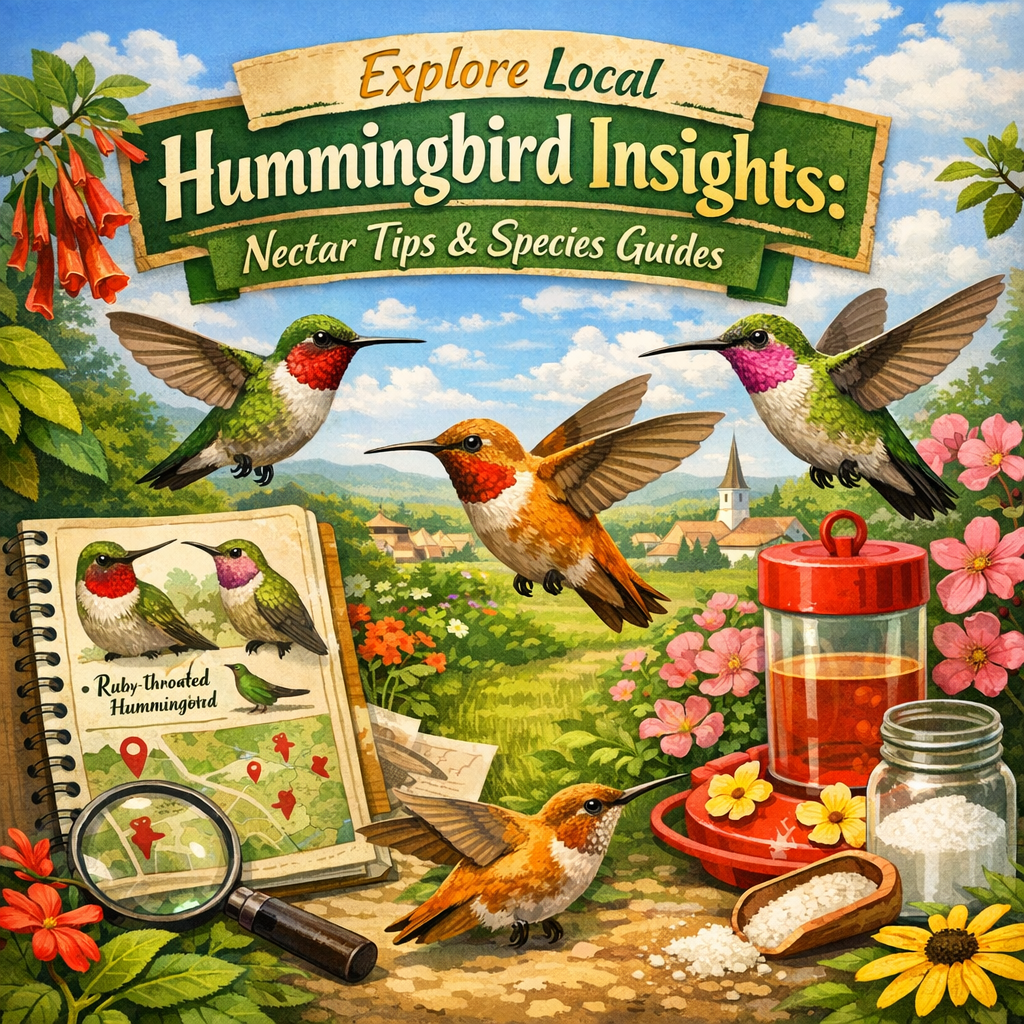
- Ruby-throated Hummingbird: The most widespread in Eastern North America, identifiable by the male’s bright red throat.
- Anna’s Hummingbird: Mostly found on the West Coast, recognizable by its shimmering emerald feathers and rose-pink throat.
- Black-chinned Hummingbird: Common in the West and Southwest, these birds have a black, shimmering throat with a purple base.
Understanding these species’ migration patterns can help in spotting them during the right seasons.
Regional News: Updates on Hummingbird Conservation
Migration Tracking Programs
Local wildlife organizations often track the migration patterns of hummingbirds. Participating in these programs by reporting sightings can contribute valuable data that helps in conservation efforts.
Impact of Climate Change
Studies indicate that climate change is affecting the migratory patterns and habitats of hummingbirds. Local news sources frequently update the community on these findings, emphasizing the importance of gardening practices that support a healthy ecosystem for these birds.
Gardening for Hummingbirds: Beyond Nectar
While nectar is vital, providing a habitat that supports the complete lifecycle of hummingbirds makes your garden a haven for them:
- Plant native species: Flowering plants not only provide nectar but also attract insects, which are crucial for protein.
- Water sources: Include misters or shallow water baths as hummingbirds need to bathe frequently.
- Shelter: Dense shrubs and trees offer resting and nesting sites.
Local Events and Resources
Check out local gardening clubs or wildlife organizations for workshops and talks on creating hummingbird-friendly environments. These can provide invaluable insights and are a great way to meet fellow enthusiasts.
Final Words
Attracting and supporting hummingbirds is a rewarding activity that not only brings beauty to your garden but also contributes to the well-being of these remarkable birds. By combining the right feeding practices with a supportive habitat and staying informed through regional news and events, you can enjoy the vibrant life and energy of hummingbirds right in your own backyard.
Whether you’re a beginner looking to attract your first visitor or an expert trying to perfect your hummingbird paradise, these insights should help you enhance your experience and contribute positively to the local wildlife in your area. Happy birdwatching!