Hummingbirds Secrets: Why Some Skip Canada’s Boreal Forest
Hummingbird Migration Patterns: Not Reaching the Borrell Forest
Why Do Some Hummingbirds Stay in the Lower 48 States?
Every year, some species of hummingbirds embark on a remarkable migration, traveling between their winter grounds in Central America and their breeding territories in the United States and Canada. One might wonder why these tiny aviators don’t extend their journey all the way to the northern reaches like the Borrell Forest in Canada. Instead, a notable number choose to nest in the lower 48 states. This phenomenon is intriguing, and the reasons behind it are both complex and fascinating.
Understanding the Migration Limits
Hummingbirds are among the smallest migratory birds, and their migration is a feat of endurance that is driven by the availability of food sources and suitable nesting areas. The decision not to migrate as far north as the Borrell Forest can be attributed to several factors.

Environmental Suitability
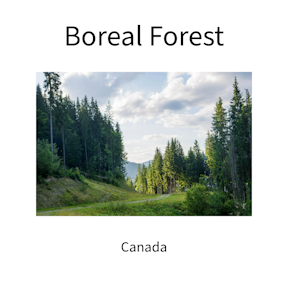
The habitats found in the lower 48 states often provide optimal conditions for nesting and feeding without the need for further travel. These environments are rich in the flora that supports the production of nectar, which is crucial for the high-energy demands of hummingbirds. The Borrell Forest, while lush, may not offer the same abundance or variety of nectar sources as the regions further south, particularly as one moves closer to the more temperate ecosystems.
Physiological Constraints
The energy required for a bird as small as a hummingbird to migrate long distances is substantial. While they are known for their incredible endurance, there is a limit to the distance they can travel without adequate food and rest. Extended migration to areas like the Borrell Forest would require more frequent stops for feeding, which may not be viable if suitable habitats are sparse along the route.
Climate and Weather Patterns
The weather also plays a crucial role in the migration patterns of hummingbirds. Harsher weather conditions in the north can be a significant deterrent. Early or particularly harsh winters can make northern areas like the Borrell Forest less hospitable for hummingbirds, which are highly sensitive to temperature changes and the availability of food sources.
Trends in Nesting Locations
Recent observations indicate that there might be a shift in the nesting patterns of hummingbirds, with an increase in numbers choosing to stay in the lower 48 states. This change can be linked to several environmental factors.
Climate Change
As global temperatures rise, the comfortable breeding range for hummingbirds also shifts. Areas that were once too cool or unpredictable for early spring nesting are now becoming more suitable. This shift reduces the need for migration further north into cooler areas like the Borrell Forest.
Urbanization
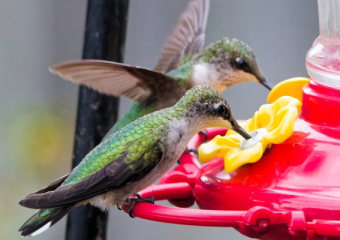
The expansion of urban areas and the increase in backyard gardening across the lower 48 states have also played a role. Gardens often provide ample feeding opportunities for hummingbirds, with people planting more hummingbird-friendly gardens that include species like salvia, zinnias, and trumpet vines, creating ideal feeding and nesting grounds.
Conclusion
The decision for hummingbirds not to migrate to places as far north as the Borrell Forest in Canada is influenced by a complex interplay of environmental suitability, physiological limits, and changing climatic conditions. As conditions continue to evolve, both due to natural and human-induced changes, it will be interesting to observe how these adaptable birds alter their migration and nesting behaviors in the future. Keeping an eye on these patterns can help conservationists better protect these fascinating creatures and ensure that they continue to thrive across North America.