Discover Exclusive Hummingbird Nectar Plants for Zone 8a
Focus Keyword: Hummingbird nectar plant
Hummingbird Nectar Plant Perfect for Planting Zone 8a
Hummingbird nectar plants are invaluable resources in gardens, particularly when they attract vibrant hummingbirds. They provide vital nectar to these incredible birds and bring a dynamic burst of life to any garden. For those residing in planting zone 8a, there’s a special plant that fits this role and isn’t typically found on the East Coast of the United States. This makes it not only a botanical rarity but a unique highlight in your garden.
Why Choose Zone-Specific Plants?
Before diving into the specifics of this remarkable hummingbird nectar plant, it’s essential to understand why choosing plants suited to your specific USDA planting zone is crucial. Zone 8a features a mild winter climate with average minimum temperatures between 10 to 15 degrees Fahrenheit. This distinct climate allows for the cultivation of plants that might not thrive in the colder or hotter zones found elsewhere. Gardening within your zone’s parameters ensures better plant health, growth, and floral production, which in turn, benefits the local wildlife, such as hummingbirds.

Revealing the Texas Sage: A Hummingbird Magnet
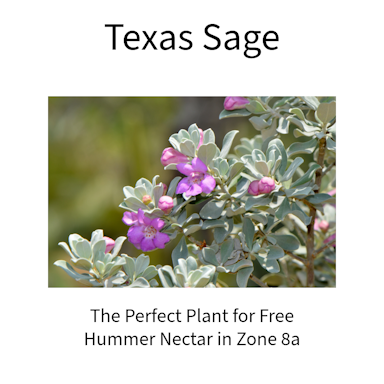
One such plant is the Texas Sage (Leucophyllum frutescens), often known as Texas Ranger or Silverleaf. This plant is native to the arid regions of Texas and Mexico, making it perfectly suited to the warmer and dryer conditions of zone 8a. Interestingly, Texas Sage is not commonly found in the Eastern United States, which covers a range from the humid subtropical regions of Florida to the colder northeastern states.
Why Texas Sage Stands Out
Easy Maintenance and Drought Resistance
Texas Sage is particularly beloved by gardeners for its low maintenance requirements and exceptional drought resistance. It requires minimal watering once established and thrives in full sun, making it ideal for zone 8a’s climate, where summers can be hot and dry.
Blooming Marvel
The plant is renowned for its beautiful silver-green foliage and vibrant purple flowers, which bloom intermittently from mid-summer through fall, depending on rainfall. The blooms are not only a spectacle for the eyes but also a magnet for hummingbirds. The flowers produce a bounty of nectar, attracting these birds, which are crucial pollinators for many other plants.
Adaptive Growth
Another advantage of Texas Sage in zone 8a is its adaptability. It can be shaped into a dense shrub, perfect for using as a hedge or privacy screen, or allowed to grow more naturally in a wildflower garden or as a focal plant. This versatility makes it well-suited to various landscape designs.
Gardening Tips for Texas Sage
To ensure your Texas Sage thrives, consider the following gardening tips:
- Planting: Choose a location that receives full sun for the majority of the day.
- Soil: Well-draining soil is crucial since Texas Sage does not fare well in overly moist conditions.
- Watering: Water the plants regularly after planting until they are well-established. Once settled, they require very little water.
- Pruning: Light pruning can help manage growth and maintain the desired shape, but be careful not to over-prune, as this can reduce flowering.
Final Thoughts
Incorporating the Texas Sage into your garden not only enhances the aesthetic appeal with its stunning blooms and unique foliage but also supports the local hummingbird population by providing an excellent source of nectar. This plant’s ability to flourish in the specific conditions of zone 8a while being a rare find on the East Coast makes it a standout choice for gardeners looking to add something uniquely attractive and environmentally beneficial to their landscapes.